
FEATURED PRODUCTS
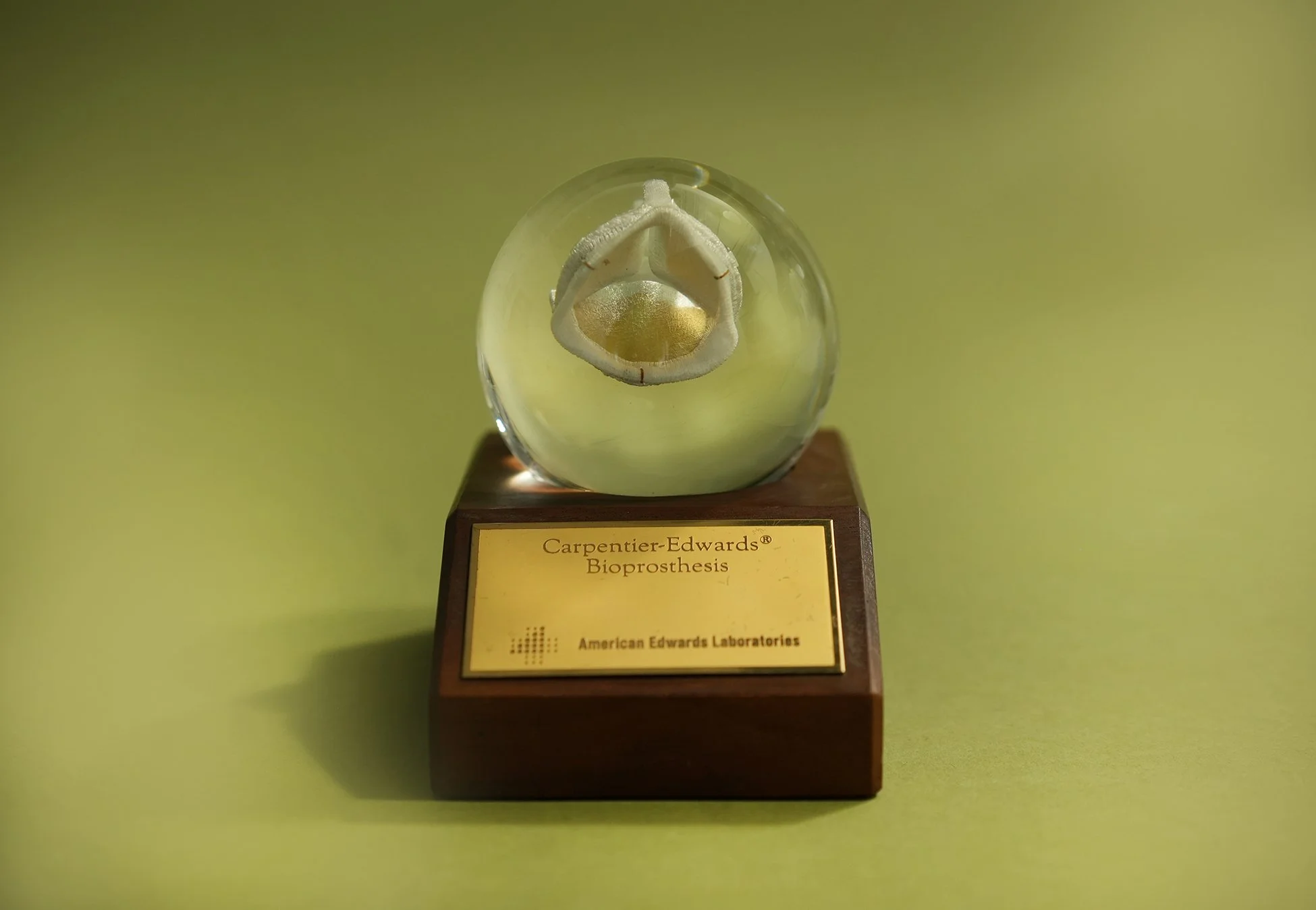
This rarely seen display C.1970’s was most likely given to select thoracic surgeons by American Edwards Laboratories. The display consists of a glass dome with a silicon preserved trileaflet bioprosthesis (porcine) aka pig heart valve. The valve was used from 1975-1986 and implanted roughly in about 1190 patents . These natural biological valves mimic the human heart valve and were proven very effective and provided patients with an excellent quality of life. I am always fascinated with the evolution of science, art and medicine coming together to prolong quality of life.
Comes mounted on a wooden base with a placard . An excellent rare resource for a teaching library and educational and historical reference.
Measures: 4.5” L x 3” W x 4.5” H
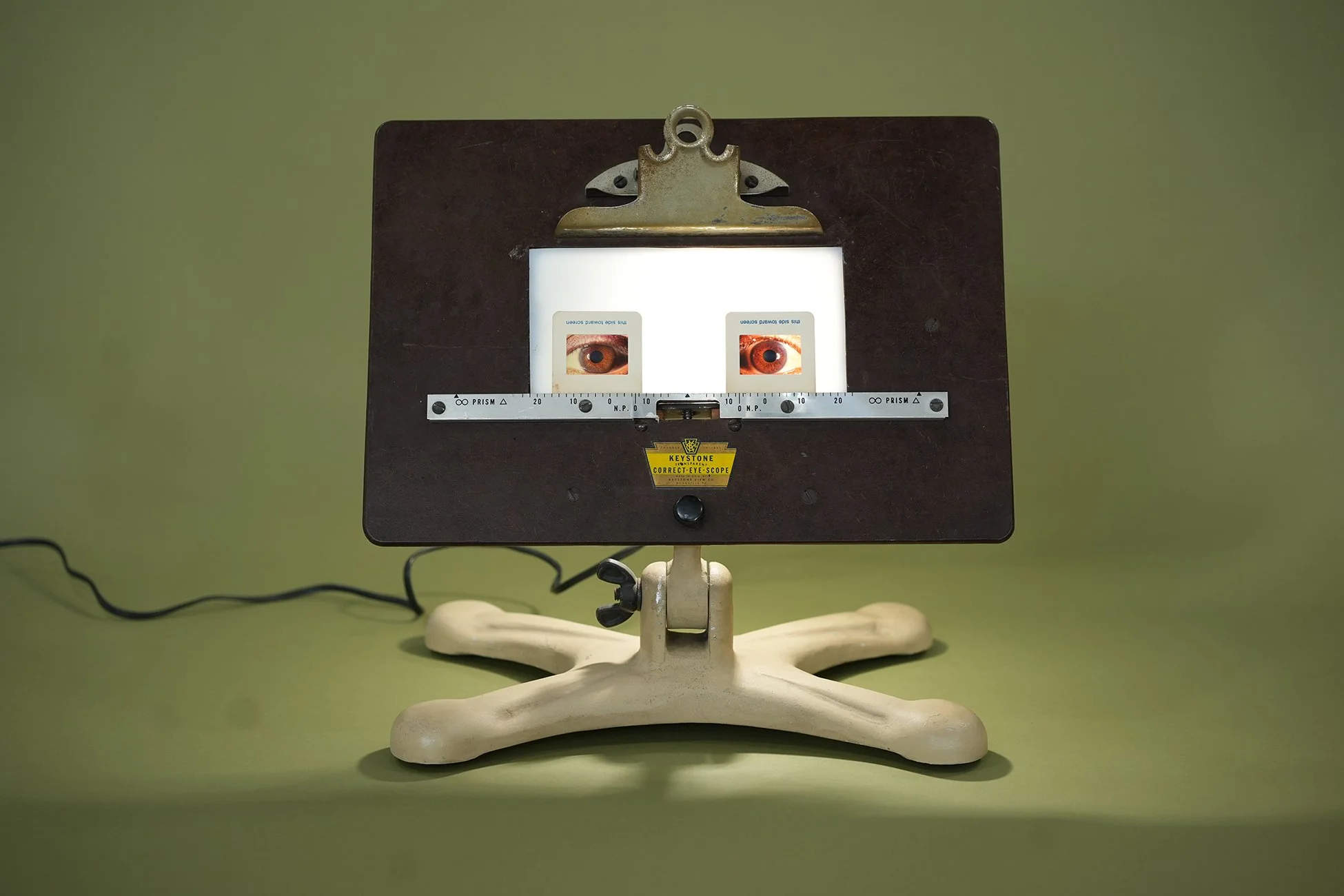
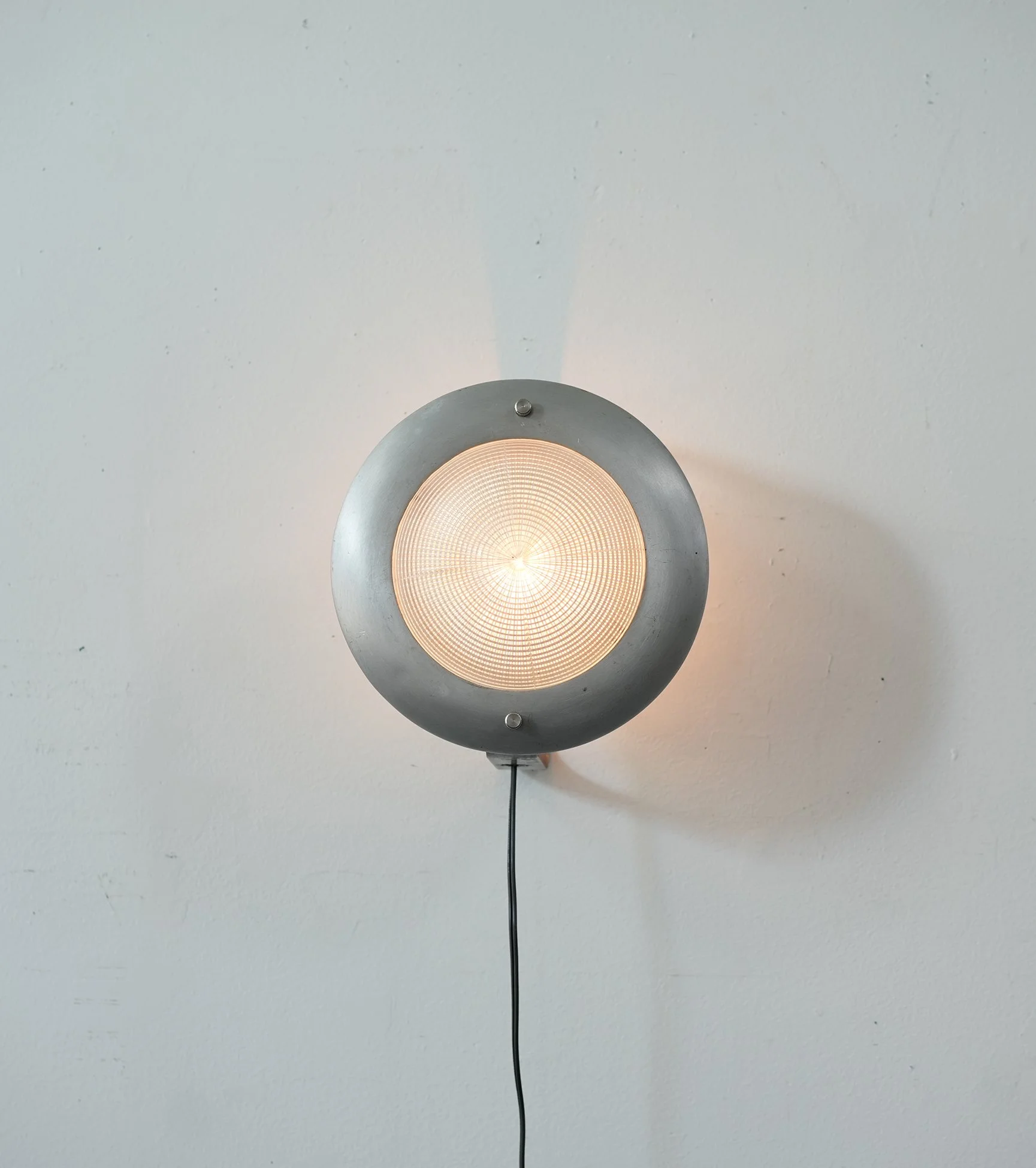
The 1890’s Keystone device was used to test eyes with an instrument and has an illuminated milk glass opening where different transparent overlays were clipped on. Consists of an aluminum base that tilts a clip board with a milk glass opening. Behind the board is a mounted light source that can be turned on in the back (was rewired by someone recently black cord).
I thought this would make a cool side light and you can clip transparencies, film strips , or just photos.
*eye slides included to get you started —
eye postcard not included
Measures: 14” W x 15” H x 10” D
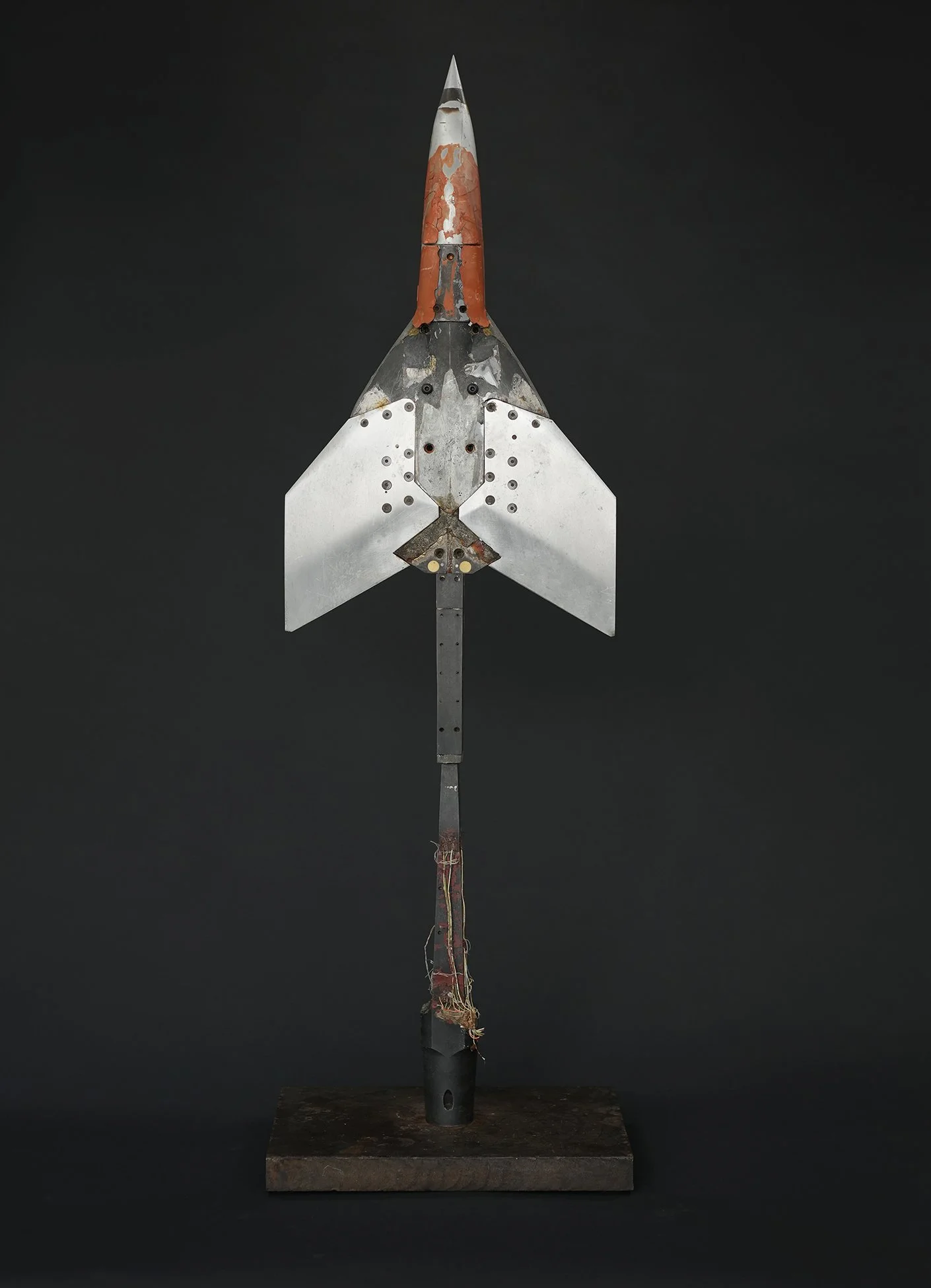
This wind tunnel model is unusual in that it has the original mounting bar that they used as they were creating the aircraft. From what I have researched it is most likely an X-type model prototype. The model is made of steel and aluminum with signs of bondo type sculpting compound used to shape certain areas as they were testing the aerodynamics. The mounting bar has all the small wires that were attached to the craft to collect data. This model is most likely from the late 1950’s—quite a heavy piece the model and base together weighs 85 lbs. I have acquired other wind tunnel testing components listed separately. All of these came from a collector and were acquired from NASA AMES wind tunnel testing facility.
Last picture shows scale of the model next to a 6’ tall manikin wearing the Apollo LCVG garment ( listed and sold separately)
Measures: Base is 14” x 9.5” x 1.5” H overall height of piece on stand is 44.5”
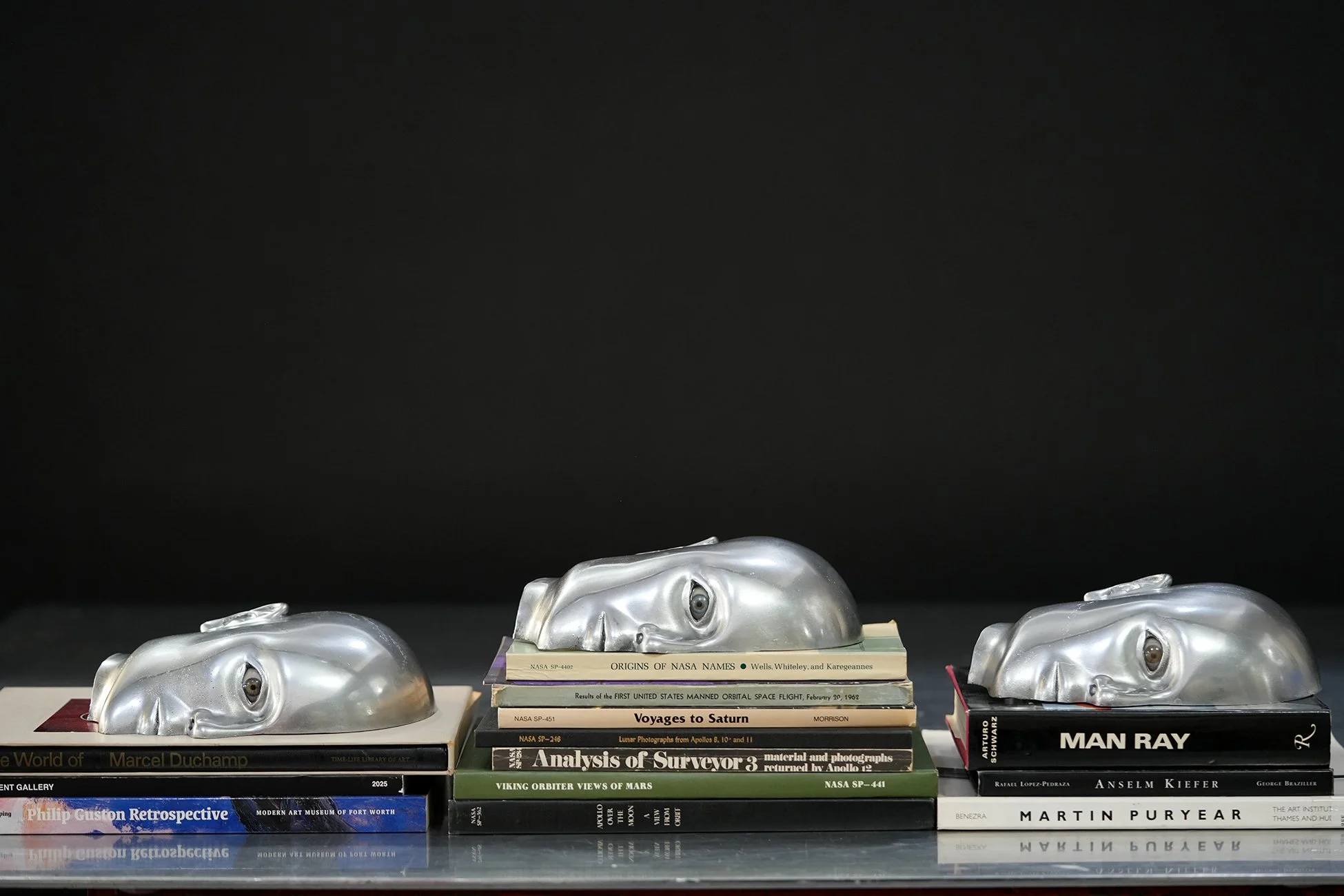
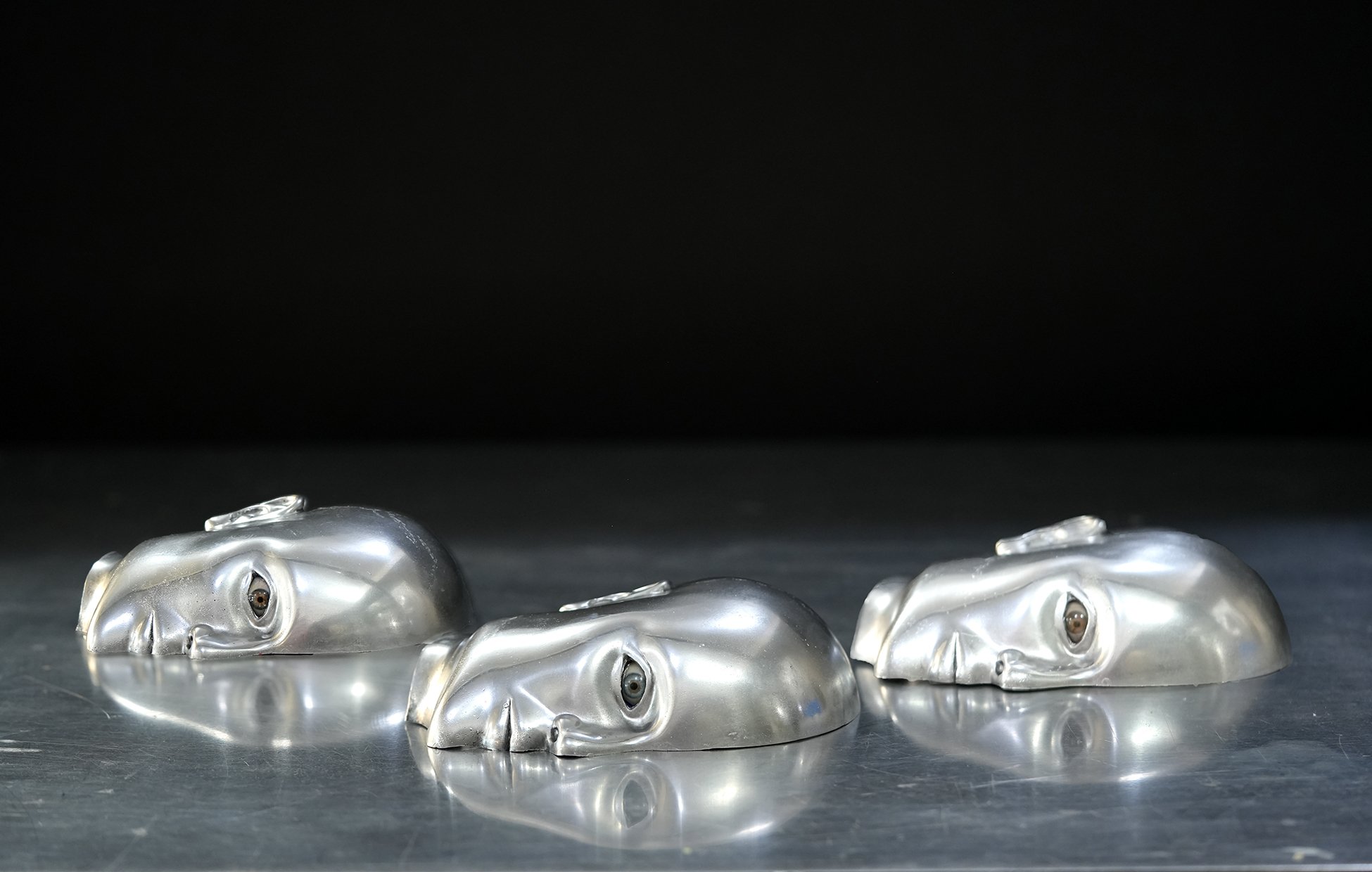
I had a nice grouping of crash test manikin parts that I salvaged from a person that had tossed many away! I have since sold the legs, heads, and components, but I managed to save an actual mold that was used to cast the heads. It was a super thick heavy mold of a half head and was the only one saved.
I made a test cast of the part in aluminum. This head is from an actual production mold from a crash test manikin facility that is now defunct and demolished . I added a vintage prosthetic eye to the opening to add a little bit of romanesque statuary aesthetic. The eye is set with an industrial strength epoxy for minimal secure hold. Looks great in the library on a stack of books.
There are three in stock
sold individually
Blue Eye
Brown Eye
Hazel Eye
Measures: 8.5” H X 3” D
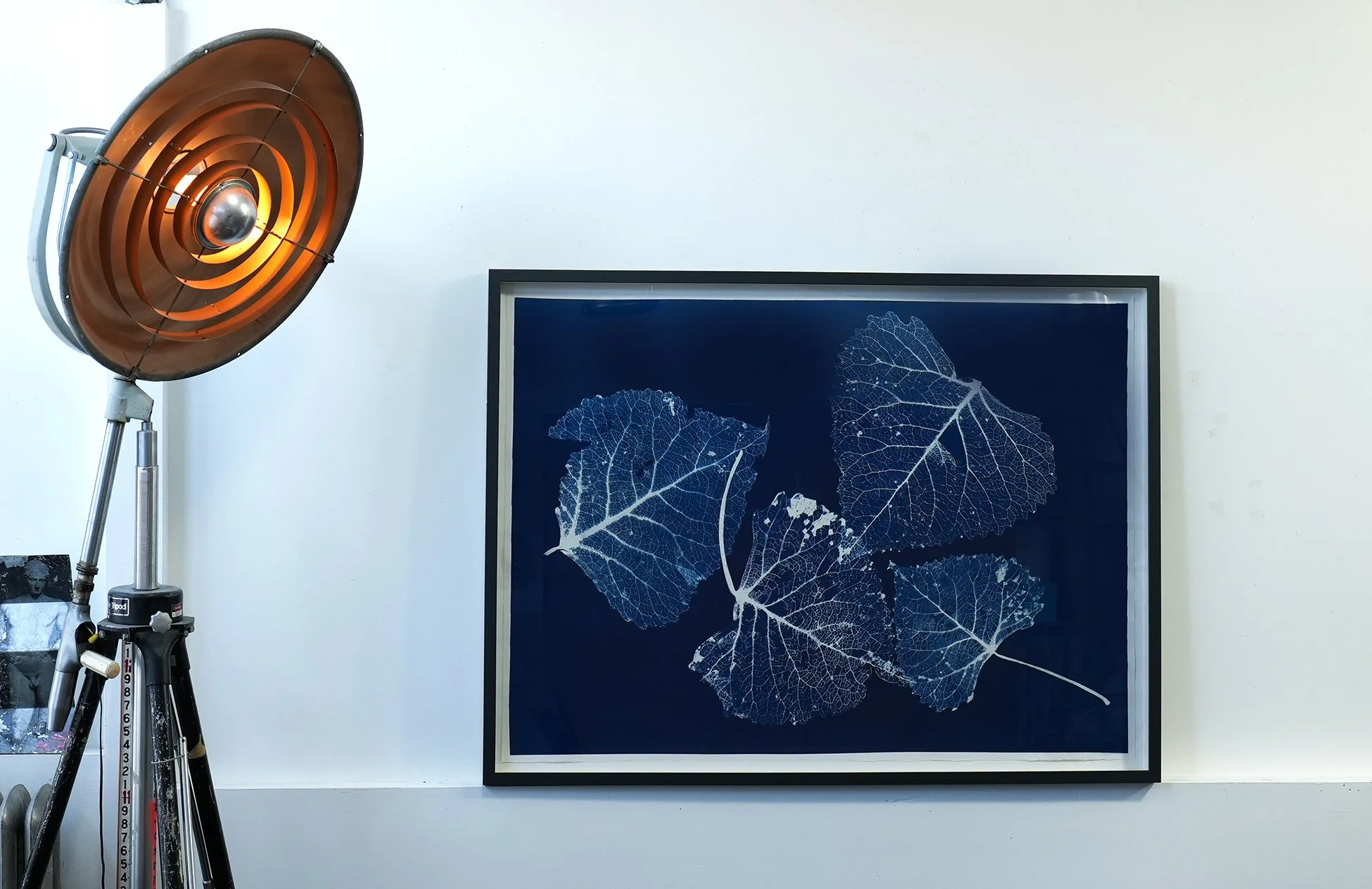
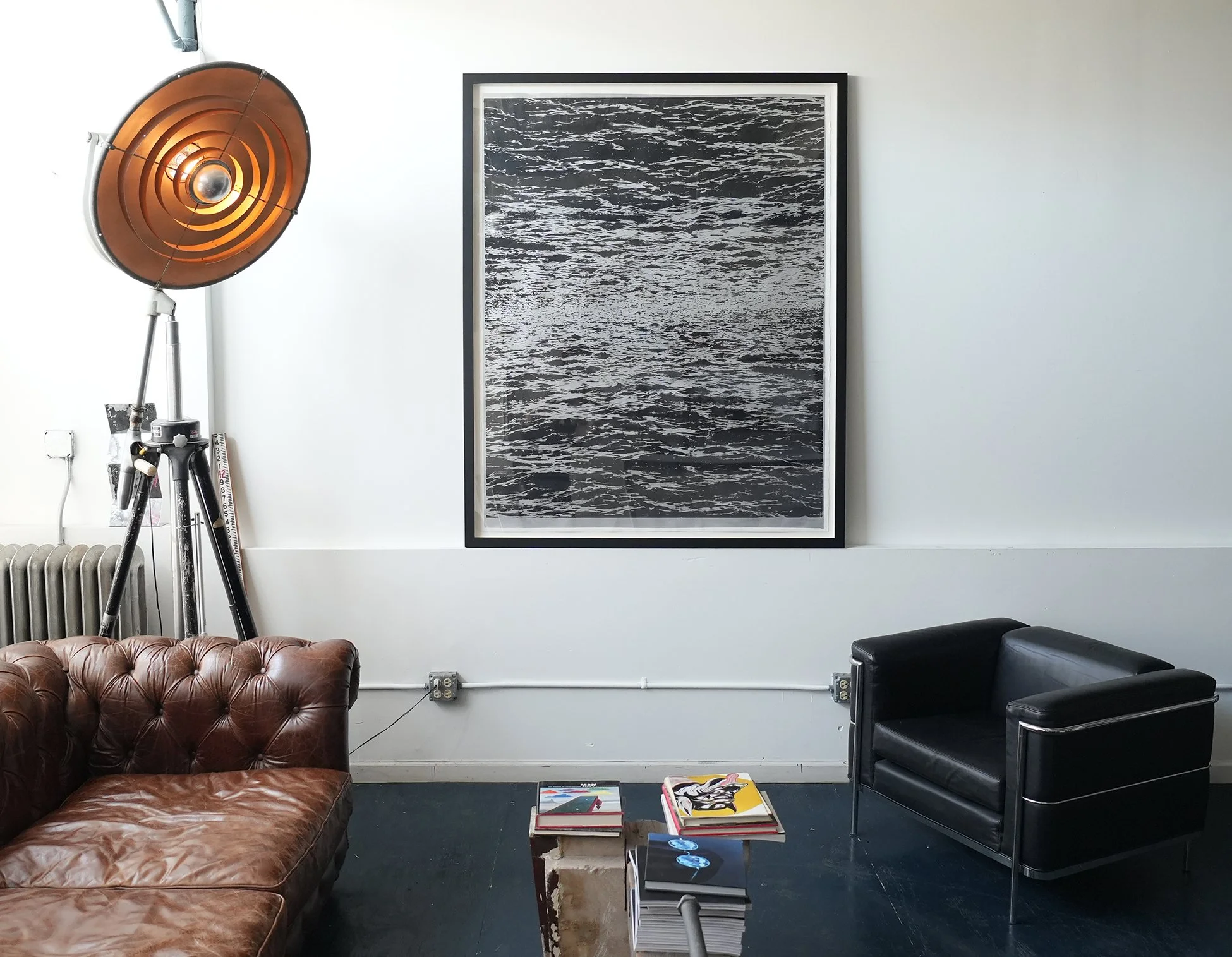
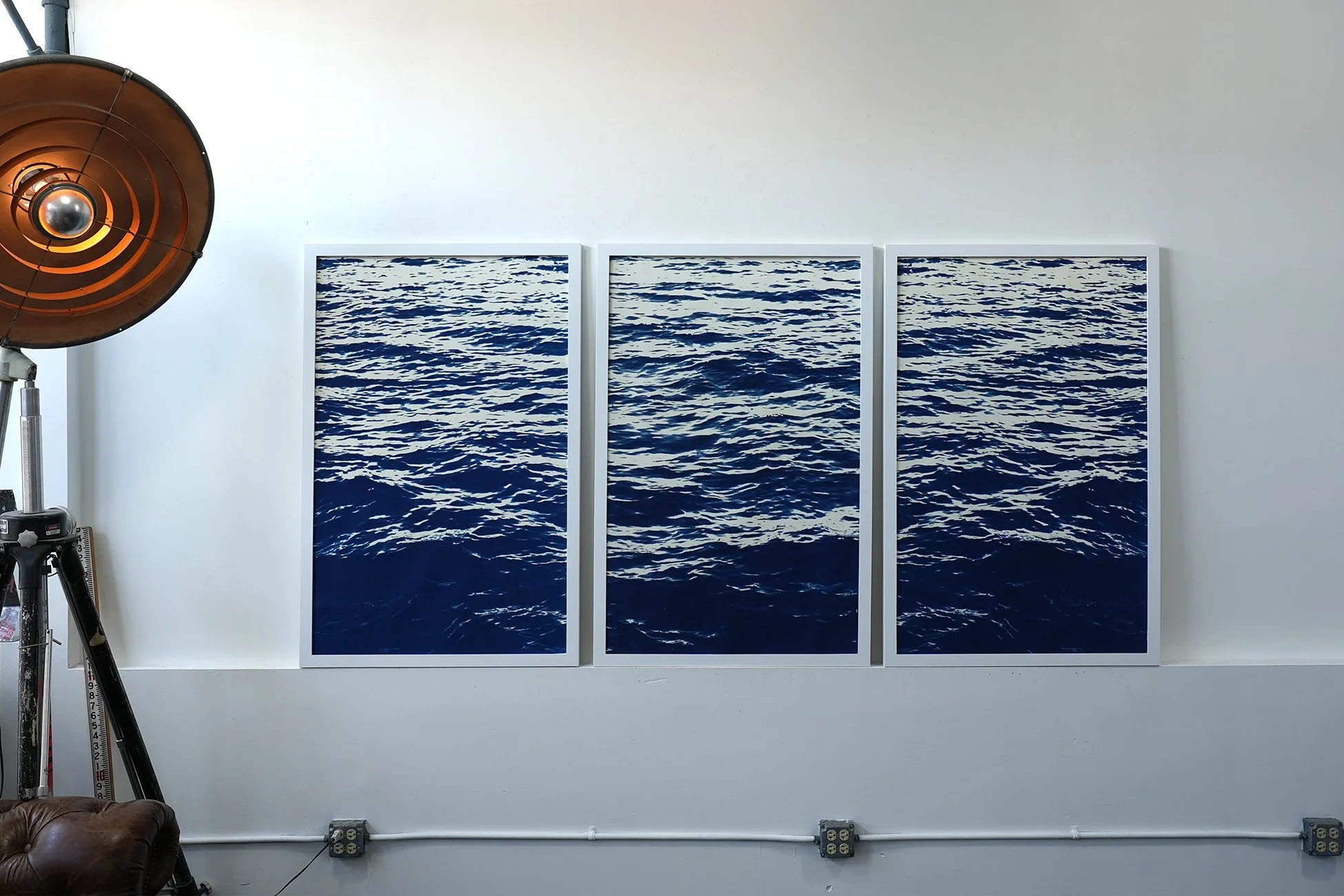
The leaves were shot in high resolution to show all the intricate details and printed on large negatives. The leaves are then hand laid on the coated paper and exposed. Each print is unique and hand made using the cyanotype photographic method. The work is printed on arches 100% cotton paper and float framed on a matte wood custom frame. Each work is hand made and has its own character to it. Measures: 49” x 65” framed
The cyanotype process:
The image is printed off a large photo negative on archival 100% cotton rag watercolor paper. The paper is hand coated with the cyanotype photographic solution then exposed / developed, washed and dried. The process of developing the work with UV light creates the unique deep indigo color permanently on the paper and also captures high detail. This is an original photo of the work and each is unique due to the hand coating and washing process.
If you are in town you can pick up at the studio just let us know.
If you are out of town please contact us for a shipping quote. Unframed work is also an option just contact us first
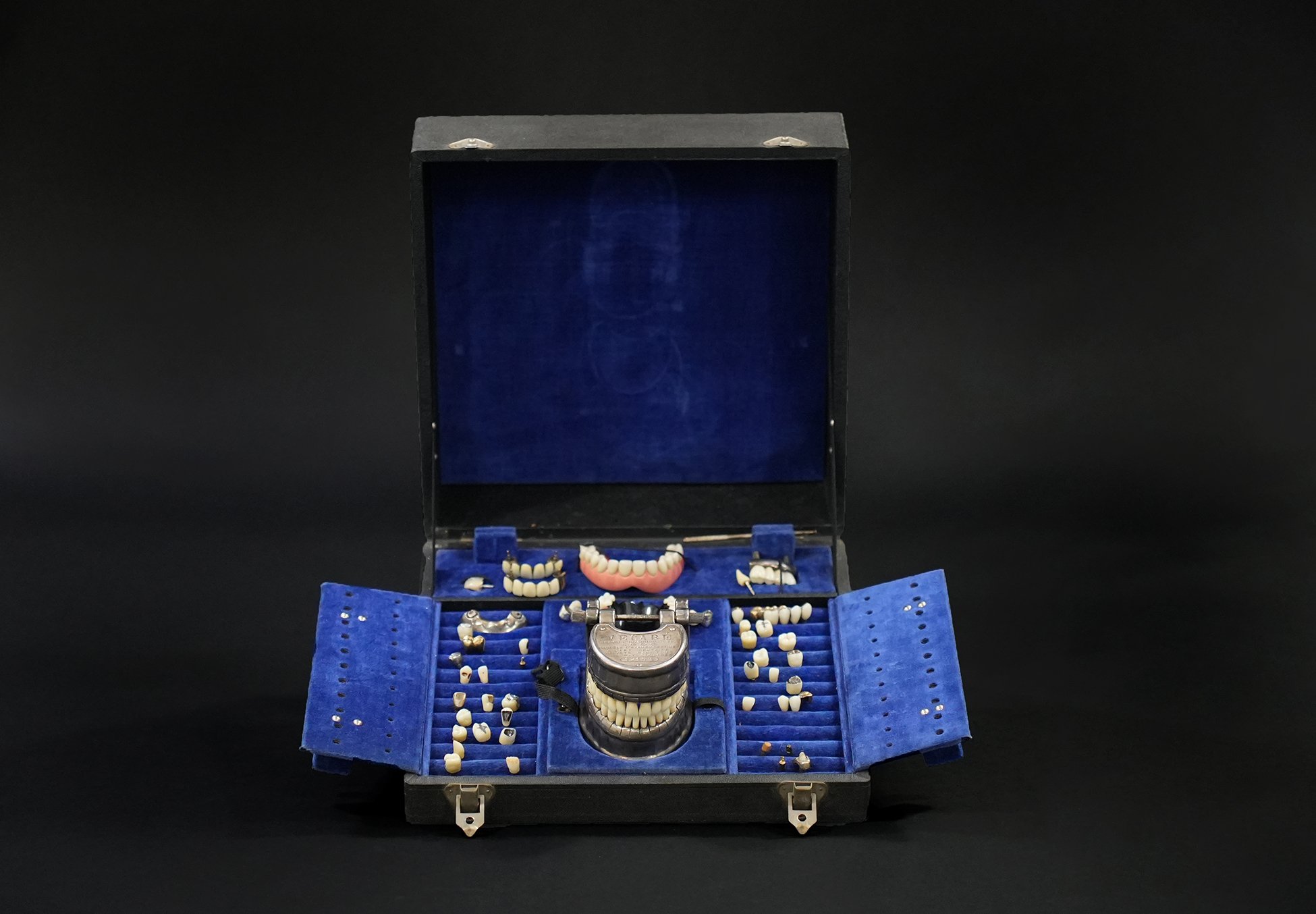
Vecabe’ produced these beautiful dental models in the 1920’s that were used for training purposes. Each tooth is fired enamel and is held by a pin system that aligns perfectly to make a correct bite. The model is silver plated and has signs of oxidation but when you take the teeth out you can see the original luster. The top of the mouth flips in a horizontal position and it is held by the rear of the stand. This piece is serial 12163 (with original matching numbered box) and these unique training models are very scarce and hard to come by.
This extra special set—the first I have acquired complete with original box with many teeth of varying procedures done in silver and gold (I believe it is brass and some white metal) . There are so many attachments for the teeth such as partials done in various metals and filling work of many types — also several false teeth. All of these pieces are specific to this training set and can fit the mouth to simulate the needed procedure for study . The box is in great shape with clean blue velvet which is a striking display when opening the box. The mouth can change ‘looks’ as desired from perfect to a well abused mouth.
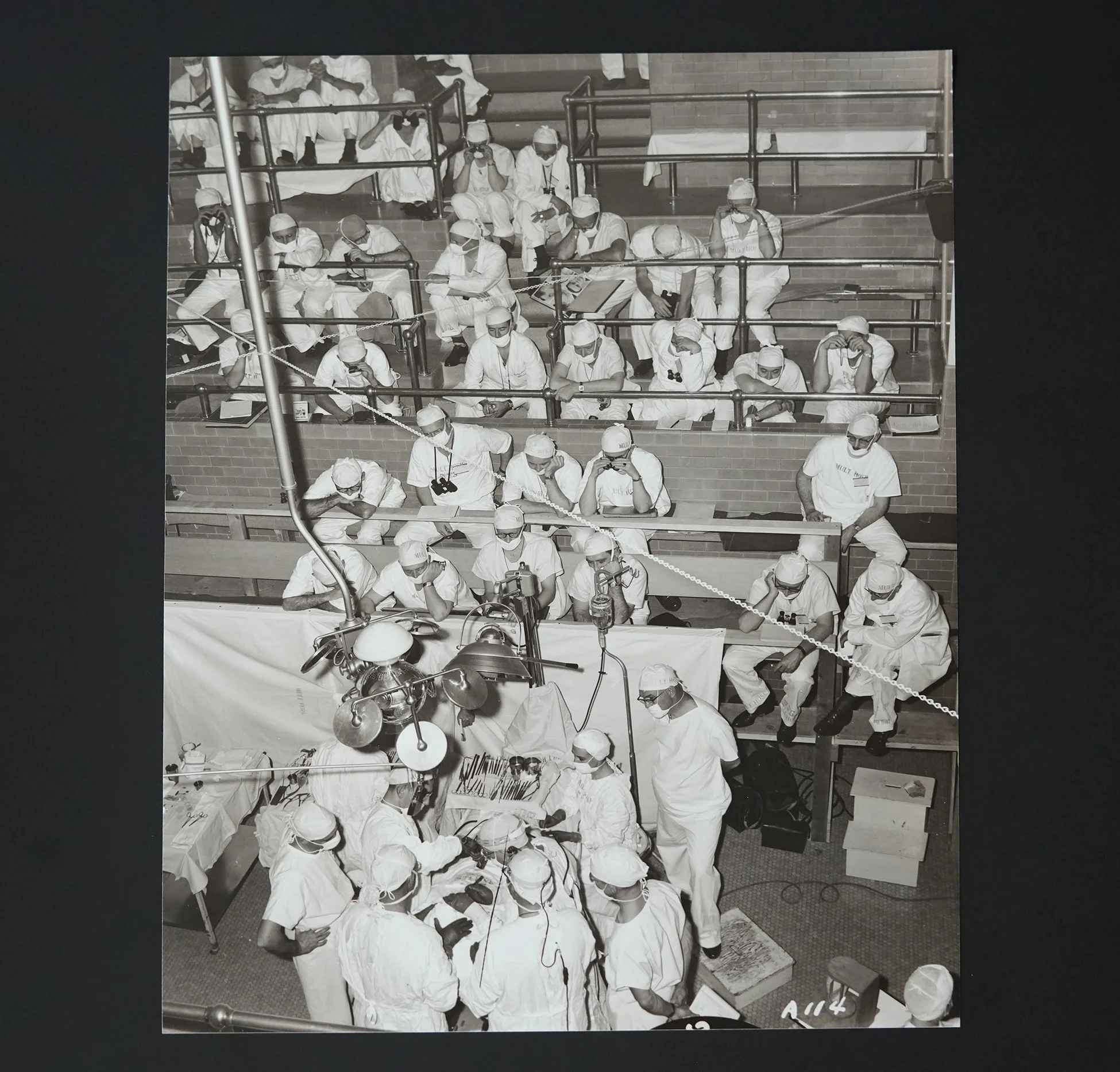
You may know my affinity for the Operay Multibeam operating light so I try to find old photos that feature it in action. This rather large 11” x 14” image was printed professionally by the photographer using the original 1950’s negative that features an operating amphitheater with a large group of doctors observing the procedure in Portland.
Measures: 11” x 14”
Gelatin silver print